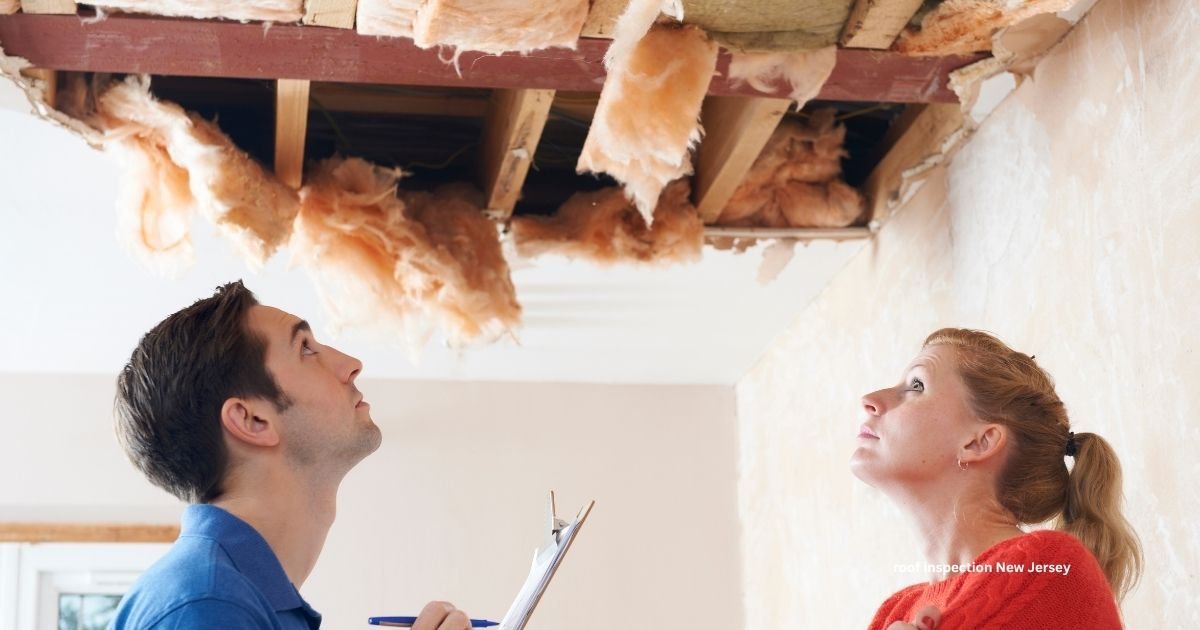
A damaged or aging roof can leave you with one difficult question: Should you fix the affected area or replace the entire roofing system?
The right answer depends on much more than the size of the leak. When comparing roof repair vs roof replacement, homeowners should consider the roof’s age, the extent of the damage, the condition of the underlying materials, future maintenance costs, warranty coverage, and how long they plan to remain in the home.
A repair may solve a small, isolated problem for a reasonable cost. However, repairing an old roof with widespread deterioration may only delay a larger project. On the other hand, replacing an entire roof when the problem is limited to one section could mean spending more money than necessary.
This guide explains how both options work, which warning signs matter most, and what to ask a roofing contractor before making a final decision.
The Quick Answer for Homeowners
Roof repair is usually the better option when the roof is relatively young, the damage is limited to a small area, the decking is still solid, and the remaining roofing materials are in good condition.
Roof replacement is often the smarter long-term choice when the roof is near the end of its expected service life, damage appears in several areas, leaks continue to return, the decking has deteriorated, or repairs are becoming frequent and expensive.
Here is a simple starting point:
- Consider repair for isolated shingle damage, one damaged flashing area, a small puncture, or a limited leak.
- Consider replacement for widespread curling shingles, extensive granule loss, sagging areas, repeated leaks, major storm damage, or an aging roof with several failing components.
- Request a professional inspection when the damage is not visible from the ground or when moisture may have reached the roof deck, insulation, attic, or interior walls.
The National Roofing Contractors Association recommends periodic roof inspections because early inspections can reveal cracked or missing shingles, deteriorated flashing, loose seams, and excessive granules before the problems become more serious.
What Does Roof Repair Include?
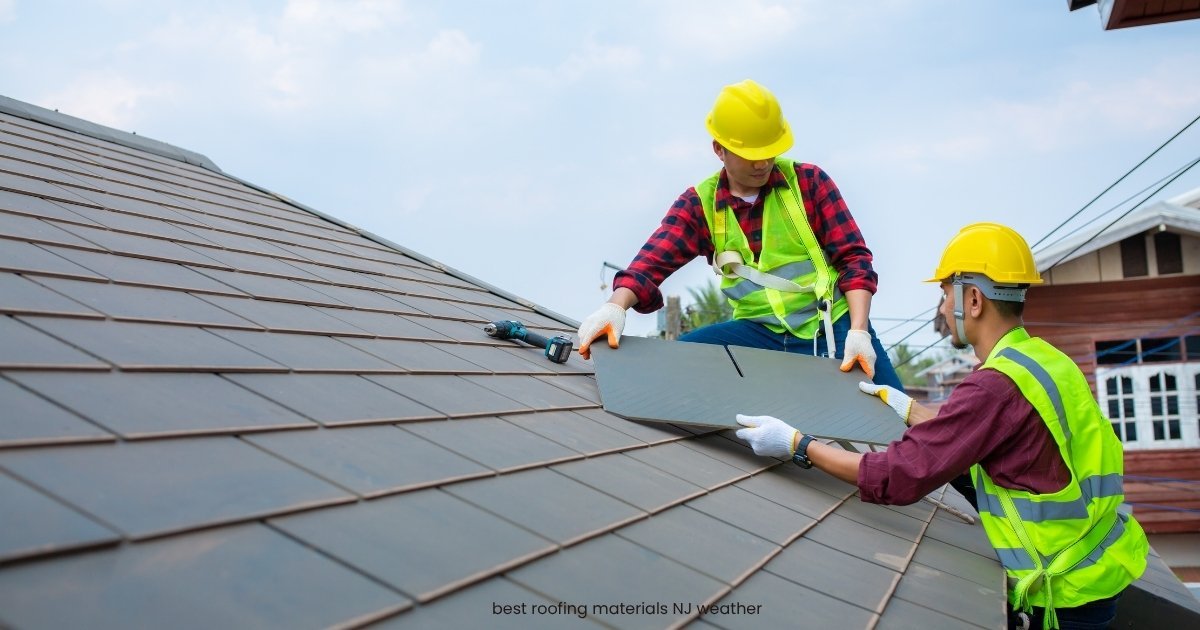
Roof repair focuses on correcting a specific defect without removing and rebuilding the entire roofing system.
Depending on the problem, a roofing contractor may:
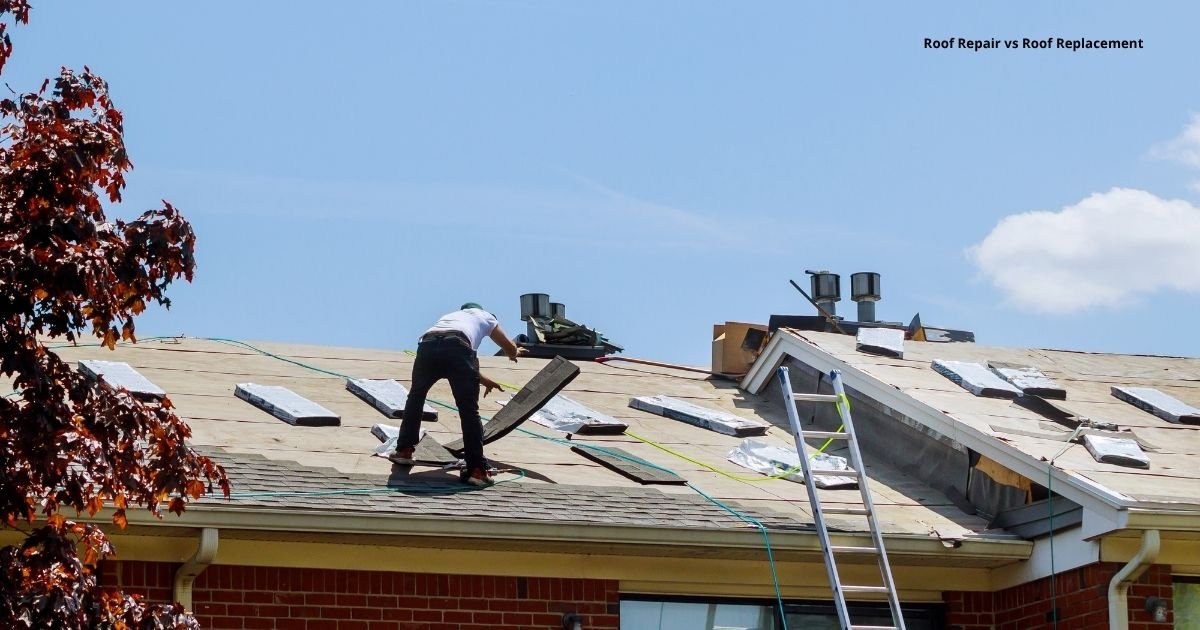
- Replace missing, cracked, lifted, or wind-damaged shingles.
- Seal or replace damaged flashing.
- Repair leaks around chimneys, skylights, vents, and roof penetrations.
- Replace damaged pipe boots.
- Repair a small section of underlayment or roof decking.
- Correct loose fasteners or exposed nail heads.
- Reseal certain roof joints.
- Repair minor storm or fallen-branch damage.
- Replace a limited section of membrane on a low-slope roof.
A repair is most effective when the contractor identifies and corrects the true source of the problem. The place where water appears inside the home may not be directly below the roof defect. Water can travel along rafters, decking, insulation, or framing before it becomes visible on a ceiling.
That is why simply applying roofing cement over a suspected leak is rarely a complete diagnostic process. The repair should address the damaged component, the water-entry path, and any wet or deteriorated material below the roof covering.
Learn more about hiring an experienced contractor near you at the online page: James Hardie Contractor Locator.
Common Problems That Can Often Be Repaired
A Few Missing or Damaged Shingles
A small number of shingles may be replaced when the surrounding roof is still flexible, properly attached, and in good condition. Matching the color may be difficult on an older roof because sunlight and weather gradually change the appearance of shingles.
A color difference does not always affect performance, but it may matter when curb appeal is important.
Damaged Flashing
Flashing is installed around roof transitions and penetrations to direct water away from vulnerable areas. Damaged flashing around a chimney, valley, skylight, or wall may create a leak even when the shingles remain in good condition.
FEMA advises homeowners who notice staining or damaged flashing to seek professional help to identify the cause and replace faulty materials when necessary.
A Leaking Pipe Boot or Vent
Rubber seals and metal components around plumbing vents can crack, loosen, or deteriorate. Replacing the damaged boot or sealing the penetration may solve the problem without requiring a full roof replacement.
A Small Puncture
A fallen branch, improperly mounted equipment, or other impact may puncture a limited section of the roof. The affected shingles, underlayment, and decking should be inspected rather than covering the opening with a surface patch.
Localized Storm Damage
Wind or hail may damage one slope more severely than the rest of the roof. A professional should determine whether the damage is truly limited or whether similar problems appear across multiple slopes.
What Does Roof Replacement Include?
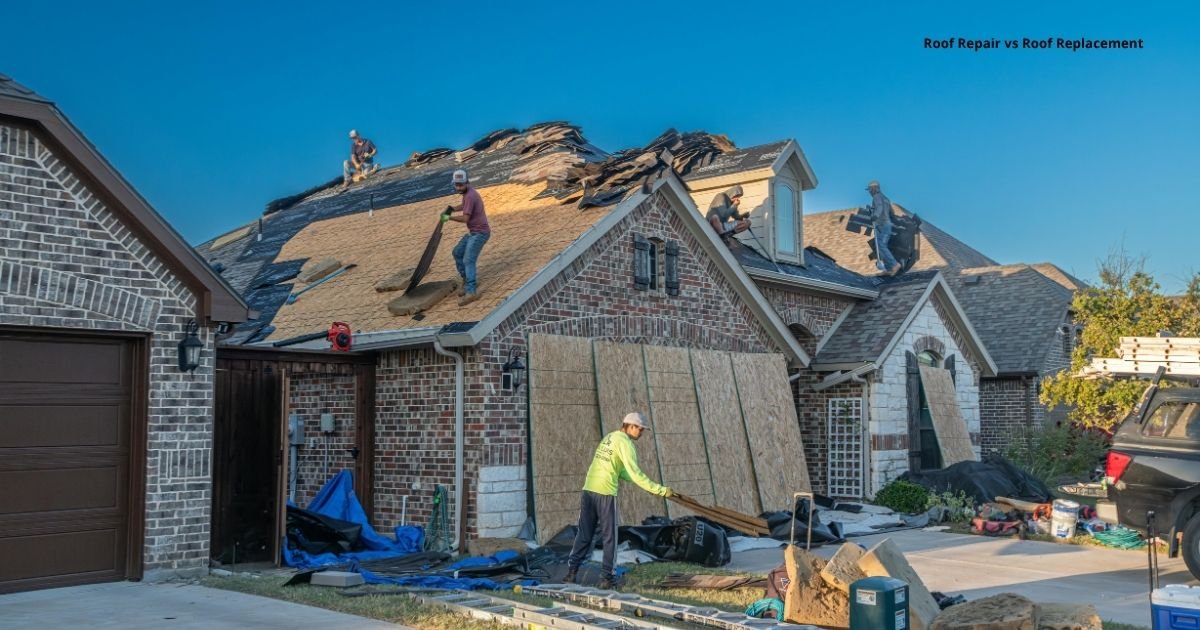
Roof replacement involves installing a new roof covering across the entire roofing area or, in some cases, replacing a complete roof section that functions independently.
A typical replacement project may include:
- Protecting landscaping, siding, windows, and exterior equipment.
- Removing old roofing materials.
- Inspecting the roof deck for rot, moisture damage, or structural weakness.
- Replacing damaged decking where needed.
- Installing underlayment and leak-protection materials.
- Replacing or integrating flashing.
- Installing the selected roofing material.
- Improving intake and exhaust ventilation when required.
- Installing ridge caps, vents, and accessories.
- Cleaning the property and removing construction debris.
- Completing a final inspection.
A replacement provides access to parts of the roofing system that are hidden during normal use. This makes it possible to find deteriorated decking, incorrect flashing, old repairs, ventilation problems, and installation defects that may not be visible from the exterior.
Full Tear-Off vs. Installing Over Existing Shingles
A tear-off removes the existing shingles before the new roofing system is installed. This approach allows the contractor to inspect the roof deck and replace damaged material.
An overlay places new shingles over an existing layer. Although this method may reduce labor and disposal work, it does not expose the deck for a complete inspection. It can also add weight and make future leak diagnosis more difficult.
Whether an overlay is permitted depends on local building requirements, the number of existing roof layers, the roof’s condition, the manufacturer’s installation instructions, and the contractor’s professional assessment.
Homeowners should not assume that an overlay is automatically acceptable simply because it appears less expensive. Ask the contractor to explain how the method may affect ventilation, appearance, warranty terms, future removal costs, and the ability to identify hidden damage.
Roof Repair vs Roof Replacement: Nine Factors That Determine the Right Choice
No single rule applies to every home. These nine factors provide a more reliable way to compare the two options.
1. The Age of the Existing Roof
Age is one of the most important decision factors, but it should not be considered alone.
A younger roof with one damaged area is usually a stronger candidate for repair. An older roof may still be repairable when it has been installed correctly and maintained well. However, investing in a major repair becomes less attractive when other parts of the roof are also approaching failure.
The expected service life varies according to:
- Roofing material.
- Product quality.
- Installation quality.
- Roof slope and design.
- Sun exposure.
- Temperature changes.
- Wind, hail, snow, and moisture.
- Attic ventilation.
- Maintenance history.
- Nearby trees and debris.
Instead of relying only on the installation date, ask the inspector to evaluate the roof’s actual condition and remaining useful life.
2. The Extent of the Damage
A repair makes the most sense when the problem is limited and the surrounding materials remain dependable.
For example, replacing shingles on one small area may be practical. Repair becomes less convincing when shingles are cracked, curled, loose, or missing across several slopes.
Widespread damage may indicate that the roof covering is failing as a system rather than at one isolated point. In that situation, repairing one section may leave the homeowner facing another leak soon afterward.
Ask the contractor to document:
- How many slopes are affected.
- The approximate size of the damaged area.
- Whether the damage is cosmetic or functional.
- Whether the underlayment has been exposed.
- Whether surrounding shingles can be disturbed without breaking.
- Whether replacement materials can be properly integrated.
3. The Number and Frequency of Leaks
One leak does not automatically mean the entire roof must be replaced. A single leak around a vent or flashing detail may have a straightforward solution.
Repeated leaks are more concerning, especially when they occur in different places. They may signal aging materials, poor installation, failed flashing, moisture beneath the roofing, or weaknesses throughout the system.
Review your repair history. If you have paid for several repairs within a short period, add those costs together. Continued small expenses may eventually approach the cost of a more permanent solution without providing the same reliability or warranty.
4. Moisture and Roof Decking Condition
The visible roof covering is only one part of the system. Water may also affect:
- Roof decking.
- Rafters or trusses.
- Attic insulation.
- Drywall.
- Electrical components.
- Interior finishes.
- Fascia and soffits.
Soft, stained, delaminated, or deteriorated decking may require removal of the roofing above it. A small amount of damaged decking can sometimes be replaced during a localized repair. Extensive deterioration usually supports a broader replacement project.
Interior warning signs include ceiling stains, peeling paint, musty odors, damp insulation, and visible moisture in the attic. These signs do not reveal the exact repair needed, but they justify a prompt inspection.
5. Sagging or Structural Movement
A sagging roofline should be treated differently from a few missing shingles.
Sagging may involve weakened decking, damaged framing, excessive weight, long-term moisture exposure, or another structural issue. This condition requires professional evaluation. A surface-level shingle repair will not correct a structural problem underneath.
Avoid walking on an area that appears soft, unstable, or visibly deformed. The evaluation may require both a roofing contractor and a qualified structural professional, depending on the condition.
6. Current and Future Repair Costs
The lowest immediate estimate is not always the least expensive solution over time.
Compare the following:
| Cost Consideration | Repair | Replacement |
| Initial expense | Usually lower | Usually higher |
| Hidden damage access | Limited | Greater access after tear-off |
| Future maintenance | May remain necessary | Often reduced on a newly installed system |
| Warranty | Usually limited to repaired work | May include broader material and workmanship coverage |
| Disruption | Usually shorter | Usually longer |
| Long-term predictability | Depends on remaining roof condition | Generally easier to plan after full replacement |
Request written estimates for both options when both are technically reasonable. Compare the complete scope rather than the final price alone.
One estimate may include decking allowances, flashing replacement, ventilation work, cleanup, disposal, permits, and warranty coverage, while another may exclude them.
7. Energy Efficiency and Attic Ventilation
Replacing a roof creates an opportunity to review attic ventilation, air sealing, insulation, and roofing color or reflectivity.
A cool roof is designed to reflect more sunlight and absorb less solar energy than a conventional roof. Its value depends on the climate, roof design, insulation, energy prices, and other building conditions. Homeowners considering reflective materials can review the U.S. Department of Energy’s cool roof guidance.
However, a new roof covering alone will not correct every comfort or energy problem. Poor insulation, air leakage, blocked intake vents, inadequate exhaust ventilation, or HVAC issues may also contribute to high indoor temperatures and energy use.
Ask the contractor whether the proposed work changes the existing ventilation balance. More ventilation is not automatically better; intake and exhaust components should work as a system.
8. Appearance, Property Value, and Future Plans
A visible repair may be acceptable when function matters more than appearance. It may be less desirable when the replacement shingles cannot match an older, faded roof.
A full replacement provides a consistent appearance and may strengthen a homeowner’s position when preparing to sell. Still, replacing a roof immediately before a sale does not guarantee that the homeowner will recover every dollar spent.
Consider your timeline:
- Staying for many years: Long-term reliability and lower maintenance may carry more weight.
- Selling soon: Appearance, inspection findings, disclosure obligations, and buyer concerns may influence the decision.
- Planning solar installation: The roof’s remaining useful life should be reviewed before panels are installed.
- Planning an addition: Coordinating roofing materials may produce a cleaner final result.
The Department of Energy notes that roof age, shape, slope, and other site conditions can affect rooftop solar suitability.
9. Warranty, Insurance, and Documentation
Review any existing manufacturer and workmanship warranties before authorizing repairs. Certain work performed by an unauthorized contractor or completed with incompatible materials may affect warranty coverage.
For insurance-related damage:
- Photograph visible damage from a safe location.
- Record the date and type of event.
- Protect the interior from additional damage when it is safe to do so.
- Contact the insurance carrier promptly.
- Keep estimates, invoices, inspection notes, and product information.
- Avoid signing an unclear or incomplete contract.
Coverage depends on the policy, cause of damage, exclusions, deductibles, roof condition, and applicable requirements. Ask the insurer to explain the claim process and required documentation in writing.
Roof Repair and Roof Replacement Comparison
| Decision Factor | Repair May Be Better | Replacement May Be Better |
| Roof age | Relatively young roof | Roof near the end of useful life |
| Damage area | One small, isolated area | Several slopes or widespread failure |
| Leaks | One traceable leak | Repeated or multiple leaks |
| Decking | Mostly dry and solid | Extensive moisture or deterioration |
| Shingles | Surrounding shingles remain flexible | Shingles are brittle, curled, or heavily worn |
| Appearance | A color difference is acceptable | Consistent curb appeal is important |
| Budget | Immediate funds are limited | Long-term financing or replacement budget is available |
| Future plans | Short-term solution is appropriate | Long-term ownership or solar installation is planned |
| Warranty | Existing roof remains covered | New system warranty offers greater value |
| Maintenance | Low repair history | Frequent repairs have become routine |
This table is a screening tool, not a substitute for an inspection. A qualified contractor should explain why the recommended scope is appropriate and identify any limitations.
Signs Roof Repair Is Probably the Better Choice
A targeted repair is often reasonable when most of the following conditions are true:
- The roof is not near the end of its expected service life.
- Damage is limited to a small and clearly identified area.
- The roof deck is dry and structurally sound.
- Only a few shingles or one accessory has failed.
- The leak source can be confirmed.
- Surrounding materials can support a durable repair.
- The roof has not required repeated service.
- Replacement materials are compatible with the existing system.
- The repair will not violate applicable warranty terms.
- The contractor can provide a clear written scope and workmanship warranty.
A high-quality repair should restore function, not merely hide visible damage.
Signs You May Need a Full Roof Replacement
Replacement deserves serious consideration when one or more of these conditions are present:
- Shingles are curling, cracking, lifting, or losing granules across large areas.
- Leaks occur in multiple rooms or return after repairs.
- The roof deck has widespread moisture damage.
- The roofline is sagging or uneven.
- Several roof slopes have storm damage.
- Materials are brittle and cannot be lifted without breaking.
- Flashing and other accessories are failing throughout the system.
- The roof has multiple existing layers.
- The existing roof has little useful service life remaining.
- Repair estimates are high compared with the value of a complete replacement.
- Matching discontinued materials is impossible and appearance matters.
- A solar installation or major exterior renovation is planned.
- The homeowner wants broader warranty coverage and more predictable maintenance.
Replacement may also be appropriate when previous work was installed incorrectly and localized repairs cannot create a reliable system.
What Happens During a Professional Roof Inspection?
A thorough roof inspection should evaluate more than shingles.
The contractor may examine:
- Roof slopes and surface materials.
- Valleys, ridges, hips, and eaves.
- Chimney, skylight, wall, and vent flashing.
- Pipe boots and penetrations.
- Gutters and drainage paths.
- Fascia and soffits.
- Attic ventilation.
- Interior staining and moisture.
- Roof decking condition.
- Evidence of previous repairs.
- Fastener placement and exposed nails.
- Storm impact or wind uplift.
- Installation details that may affect warranty coverage.
NRCA encourages homeowners to evaluate storm damage from ground level and leave close inspection and repair work to professional roofing contractors.
Questions to Ask the Roofing Contractor
Ask each contractor the same core questions so the proposals are easier to compare:
- What is the exact source of the problem?
- Is the damage limited or widespread?
- Did you inspect the attic and roof deck where accessible?
- How much useful life may remain?
- Is repair technically sound, or is it only temporary?
- What materials will be removed and replaced?
- Will flashing be reused or replaced?
- How will ventilation be evaluated?
- What happens if damaged decking is discovered?
- Are permits required for this scope?
- Who handles debris removal and property protection?
- What workmanship warranty is included?
- Which manufacturer warranty applies?
- Is the estimate fixed, or could additional charges apply?
- Can you provide proof of licensing and insurance where required?
- Who will supervise the project?
- What payment schedule will be used?
- How will change orders be approved?
How to Compare Roofing Estimates
Do not compare estimates by price alone. Create a side-by-side worksheet showing:
- Material manufacturer and product line.
- Underlayment.
- Leak barrier.
- Flashing.
- Ventilation components.
- Fasteners.
- Decking allowance.
- Disposal.
- Permits.
- Property protection.
- Cleanup.
- Warranty terms.
- Project schedule.
- Payment structure.
- Exclusions.
An inexpensive proposal may become more costly when important items are excluded or added later.
Contractor Red Flags
Use caution when a contractor:
- Demands full payment before work begins.
- Cannot provide a written scope.
- Refuses to document credentials.
- Uses high-pressure sales tactics.
- Recommends covering obvious moisture damage.
- Avoids discussing ventilation or flashing.
- Cannot explain warranty limitations.
- Requests that you sign an incomplete contract.
- Offers to alter an insurance estimate improperly.
- Appears immediately after a storm without an established business presence.
Emergency Steps After a Storm
After severe weather:
- Keep people away from fallen power lines and unstable areas.
- Inspect from the ground rather than climbing onto the roof.
- Photograph visible conditions when it is safe.
- Move valuables away from active interior leaks.
- Place containers under dripping water.
- Contact a qualified roofing contractor.
- Notify the insurance carrier when a claim may be necessary.
- Keep receipts for emergency protection work.
- Do not make permanent changes before required documentation is completed.
How Roofing Material Affects the Decision
The repair-versus-replacement calculation changes according to the material.
Asphalt Shingles
Asphalt shingles are commonly repaired when damage is limited and surrounding shingles remain flexible. Older shingles may crack when lifted, making a clean repair more difficult.
Metal Roofing
Individual panels, fasteners, sealants, flashing, or penetrations may sometimes be repaired. Corrosion, widespread coating failure, incorrect fastening, or movement across the system may require a larger scope.
Tile Roofing
Broken tiles can often be replaced, but the underlayment below the tiles may be the real source of leakage. Walking on tile can also create additional breakage, so inspection methods matter.
Wood Shakes or Shingles
Individual damaged pieces may be replaced. Widespread splitting, decay, biological growth, or fastening problems may support replacement.
Low-Slope Roofing
Localized punctures and seam problems may be repairable. Widespread membrane deterioration, trapped moisture, failed adhesion, or poor drainage may require restoration or replacement.
A contractor experienced with the specific material should determine whether new components can be integrated with the existing roof.
Common Homeowner Mistakes to Avoid
Waiting Until a Small Leak Becomes Major Damage
Water damage can spread beyond the visible stain. Prompt inspection may reduce damage to insulation, ceilings, decking, and finishes.
Hiring Based Only on the Lowest Price
A roofing proposal is valuable only when the scope is clear. Missing flashing, ventilation, cleanup, disposal, and decking work can create costly surprises.
Assuming Every Leak Requires Replacement
Some leaks come from a single failed component. A full replacement may be unnecessary when the roof is otherwise sound.
Repairing an Entirely Worn-Out Roof Again
Repeated repairs can create a false sense of savings. Track repair costs and compare them with the remaining life of the system.
Ignoring the Attic
The attic may show moisture, inadequate ventilation, wet insulation, daylight through openings, or staining that is not visible outside.
Performing Unsafe DIY Work
Steep slopes, wet materials, unstable decking, loose debris, and power lines create serious hazards. Professional assessment is especially important after severe weather.
Failing to Keep Records
Save contracts, invoices, inspection photographs, product information, warranties, permit documents, and maintenance records. These materials may help with future service, warranty questions, insurance claims, and property sales.
Frequently Asked Questions
1. Is it better to repair or replace a leaking roof?
It depends on the source of the leak and the condition of the remaining roof. A leak caused by one damaged flashing detail or pipe boot may be repairable. Several leaks, widespread shingle deterioration, wet decking, or an aging system may make replacement more practical.
2. Can part of a roof be replaced instead of the entire roof?
Yes, under certain conditions. A complete slope, addition, porch roof, or separate section may sometimes be replaced independently. The new materials must integrate correctly with the remaining roof, drainage paths, flashing, valleys, and transitions.
Partial replacement may create color differences and warranty complications, so the scope should be documented carefully.
3. How many missing shingles require a new roof?
There is no universal number. A few missing shingles may be repaired when the roof is otherwise healthy. Replacement may be more appropriate when missing shingles appear across several slopes or when the remaining shingles are brittle, loose, or heavily worn.
4. Should I replace my roof before installing solar panels?
Have the roof inspected first. Removing solar panels later to replace an aging roof can add complexity and expense. Consider the roof’s age, condition, expected remaining life, panel layout, warranties, and coordination between the roofing and solar contractors.
5. Will homeowners insurance pay for roof replacement?
Coverage depends on the policy and the cause of damage. Contact the insurance carrier for an explanation of covered events, exclusions, deductibles, documentation requirements, and settlement procedures. Keep photographs, inspection reports, repair records, and written estimates.
6. Can a roof be repaired during winter?
Some repairs can be completed in cold weather, but temperature, snow, ice, moisture, material requirements, and worker safety may affect the process. The contractor should follow manufacturer instructions and choose a suitable weather window.
Emergency protection may be installed first, followed by permanent work when conditions improve.
7. Does one ceiling stain mean I need a new roof?
Not necessarily. A ceiling stain confirms that moisture has entered or condensed somewhere, but it does not identify the exact source. The cause could involve roofing, flashing, plumbing, condensation, HVAC equipment, or another building component.
A roof and attic inspection can help determine the source.
8. How often should a roof be inspected?
Inspection frequency depends on the roof, climate, surrounding trees, previous damage, and manufacturer or contractor recommendations. NRCA homeowner guidance notes that twice-yearly inspections can reveal visible problems such as cracked shingles, loose seams, deteriorated flashing, and excessive granules. Additional inspection is sensible after major wind, hail, or falling-debris events.
Final Decision: Repair the Problem or Replace the System?
Choose repair when the roof is generally healthy and the problem is small, identifiable, and technically repairable.
Choose replacement when the roofing system is aging, several areas are failing, moisture has affected underlying materials, structural concerns exist, or continued repairs no longer offer dependable value.
The most important step is obtaining an honest inspection supported by photographs, clear explanations, and a written scope. Ask the contractor to explain both the immediate solution and the likely condition of the roof over the next several years.
A good decision should protect the home today without creating avoidable costs tomorrow.
Contact us to learn more about hiring a qualified contractor today.
