The short answer: vinyl siding wins on budget and low maintenance; fiber cement wins on longevity and resale value. Which one is right for your home depends on how long you plan to stay, what your budget is, and where in New Jersey you live.
If you’re comparing vinyl siding vs fiber cement siding for a NJ home, you’re in the right place. We install both at Genesis Roofing & Exteriors, so this isn’t a sales pitch for one material over the other — it’s an honest breakdown to help you make the call that makes sense for your specific situation.
Learn more about our siding installation services here.
What Is Vinyl Siding?
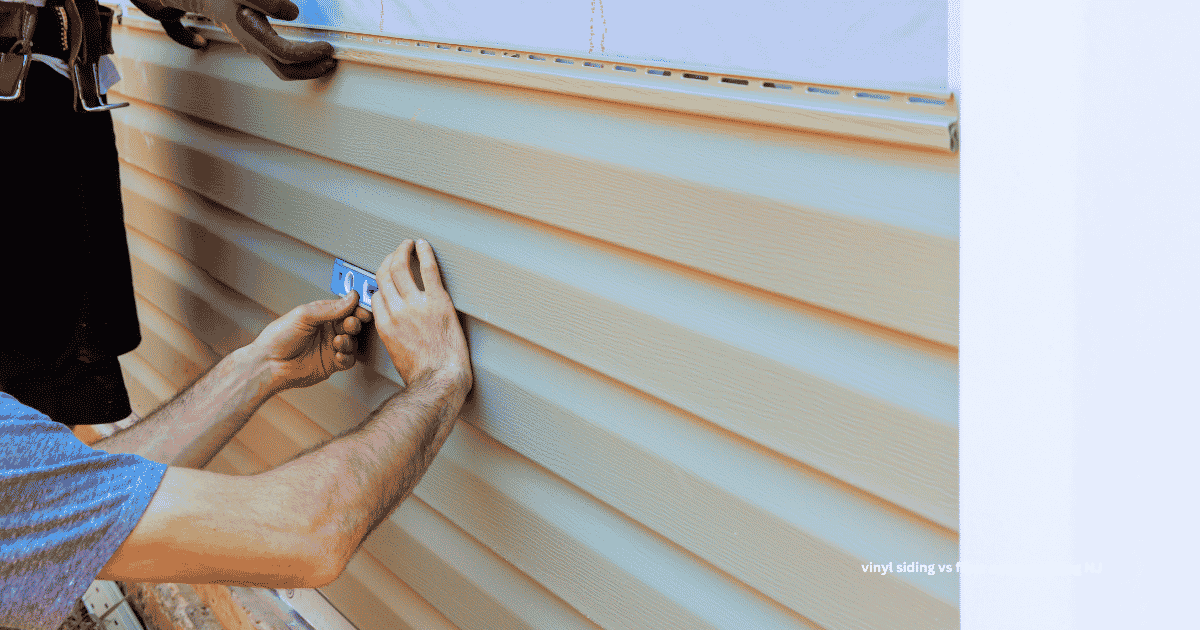
Vinyl siding is made from PVC (polyvinyl chloride) — a factory-finished plastic panel that comes in a wide range of profiles, colors, and textures. It’s the most popular siding material in the United States, and for good reason: it’s affordable, nearly maintenance-free, and holds up well in most climates.
In New Jersey, vinyl siding is a go-to choice for homeowners who want a clean, updated exterior without a major investment. It handles NJ humidity well and doesn’t rot, peel, or attract pests. The one thing to know: vinyl expands and contracts with temperature changes. In NJ winters, improper installation can cause panels to buckle or gap — which is why professional installation matters more than most people realize.
Common vinyl profiles used on NJ homes:
- Double 4″ and double 5″ lap (most common)
- Dutch lap (beveled look)
- Beaded seam (coastal/traditional homes)
- Board & batten (farmhouse style)
- Insulated vinyl (thicker, better thermal performance)
What Is Fiber Cement Siding?
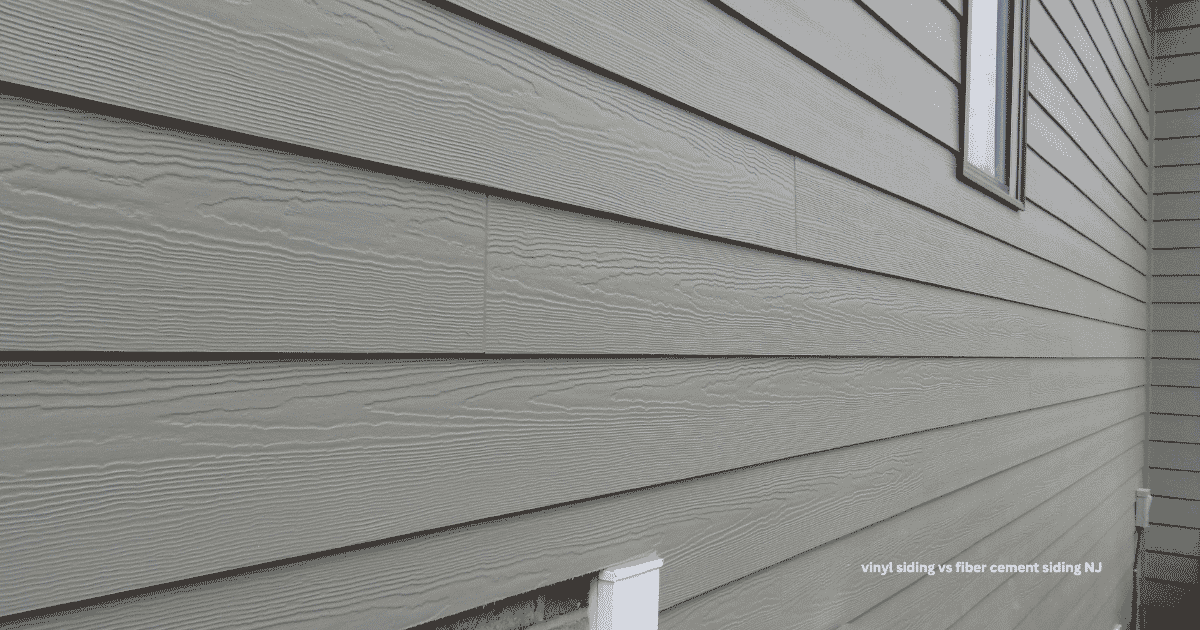
Fiber cement siding is a composite material made from Portland cement, sand, and cellulose fiber. The most widely known brand is James Hardie, which is why you’ll often hear NJ homeowners ask about “Hardie board” — but fiber cement is the material category, not a brand-specific product.
Fiber cement is heavier than vinyl and requires more labor to install, which contributes to its higher cost. But it also lasts longer, resists impact better, and holds paint for years without fading. It can be factory-finished (James Hardie’s ColorPlus technology) or painted on-site.
For NJ homes specifically, fiber cement performs exceptionally well. It’s non-organic, so it won’t rot, swell, or attract carpenter bees. It handles the state’s freeze-thaw cycles, coastal salt air, and humid summers without the issues that can affect wood or lower-quality vinyl.
Common fiber cement profiles used on NJ homes:
- HardiePlank lap siding (most popular, mimics wood look)
- HardiePanel vertical siding
- HardieShingle (cedar shake look without the maintenance)
- HardieTrim for corners, windows, and door surrounds
Vinyl vs Fiber Cement: Head-to-Head Comparison
Here’s how the two materials stack up across the factors that matter most for NJ homeowners:
| Category | Vinyl Siding | Fiber Cement Siding |
|---|---|---|
| Installed cost in NJ | $4–$13/sq ft | $7–$14/sq ft |
| Full home cost (1,500 sq ft) | $8,000–$18,000 | $14,000–$28,000 |
| Lifespan | 20–40 years | 30–50 years |
| Paint required? | No — color is molded in | Yes — every 12–15 years |
| Repainting cost | N/A | $3,000–$6,000/repaint |
| Maintenance level | Very low | Low–medium |
| Impact resistance | Fair | Superior |
| Weather resistance in NJ | Good | Excellent |
| Pest & rot resistance | Excellent | Excellent |
| Fire resistance | Melts but slows spread | Non-combustible |
| ROI on home sale | ~70% | ~78% |
| NJ permit required? | Yes | Yes |
Cost: What You’ll Actually Pay in New Jersey
Vinyl siding in NJ:
- Standard vinyl: $4–$9 per square foot installed
- Insulated vinyl: $7–$13 per square foot installed
- Full home (1,500 sq ft of wall surface): approximately $8,000–$18,000
Fiber cement siding in NJ:
- $7–$14 per square foot installed
- Full home (1,500 sq ft): approximately $14,000–$28,000
- Add $3,000–$6,000 every 12–15 years for professional repainting
The lifetime cost calculation changes the picture. If you paint fiber cement twice over 30 years, you’re adding $6,000–$12,000 to the total. That said, fiber cement’s longer lifespan means you may never need to replace it while you own the home — which vinyl at the lower end of its lifespan range might require.
Financing is available for both options through our partnership with Enhancify. Ask about payment plans when you request your estimate.
Get a free siding estimate in New Jersey here.
Durability in New Jersey’s Climate
New Jersey puts siding through a lot: humid summers, cold winters, freeze-thaw cycles from November through March, spring and fall storms, and coastal salt air in shore communities. Both materials handle NJ conditions — but differently.
Vinyl in NJ: Performs reliably in most conditions. The main vulnerability is impact — a hard hit from a branch or hail can crack a panel. Standard vinyl can also become brittle in extreme cold (below 10°F), making it more susceptible to cracking if struck. Insulated vinyl handles NJ winters significantly better and is the better choice for homes with high temperature exposure.
Fiber cement in NJ: Handles every NJ weather condition without exception. It won’t crack from cold, won’t buckle from heat, and won’t swell from humidity. For homes in coastal areas — or any property where long-term durability is the priority — fiber cement is the clear winner.
Maintenance: What You’ll Actually Have to Do
Vinyl siding maintenance:
- Wash the exterior once or twice a year with a garden hose (a mild soap solution removes most dirt and mildew)
- Inspect for cracked or warped panels after major storms
- Damaged panels can usually be replaced individually without disturbing the rest of the installation
- No painting, ever
Fiber cement maintenance:
- Annual inspection of caulking around windows, doors, and trim — this is where moisture typically enters
- Repainting every 12–15 years (or every 15+ years with James Hardie ColorPlus factory finish)
- Inspect for chips or cracks at corners and edges; touch up with exterior paint as needed
Vinyl is genuinely low-maintenance for the life of the material. Fiber cement requires a bit more attention — primarily the repainting cycle — but the intervals are long enough that most homeowners don’t find it burdensome.
Resale Value and Curb Appeal
Both materials improve curb appeal and deliver positive return on investment compared to aging or damaged siding. The difference is a matter of degree.
Fiber cement — particularly James Hardie with a ColorPlus finish — signals quality to buyers and real estate agents. In a competitive NJ market, it can differentiate a home in a way that standard vinyl doesn’t. Estimated ROI: 76–80%.
Quality vinyl siding, especially in premium profiles (insulated, board & batten, cedar shake texture), is competitive on curb appeal and delivers roughly 68–74% ROI. It’s not the liability that low-quality or faded vinyl can be.
Bottom line: both are a meaningful upgrade if your current siding is failing. Fiber cement has a slight edge in markets where buyers are already comparing comparable homes.
Which Should You Choose? A Decision Framework
There’s no universally correct answer here. Here’s how to think through the decision:
Choose vinyl siding if:
- Budget is the primary driver
- You plan to sell the home within 5–10 years
- The property is a rental or investment
- You want the lowest possible ongoing maintenance
- The home is not in a coastal or high-humidity microclimate
Choose fiber cement if:
- You’re planning to stay in the home long-term (10+ years)
- Resale value and buyer perception matter
- The home is near the shore or in a consistently humid area
- You want the wood aesthetic without wood’s maintenance demands
- You want the longest-performing exterior system possible
If you’re genuinely unsure which material makes more sense, a professional inspection of your current exterior — including the condition of your sheathing, moisture barrier, and trim — can help clarify the right call. Genesis Roofing & Exteriors offers free estimates and will give you an honest recommendation based on what we actually see on your home.
Learn more about siding installation in NJ here.
Why the Contractor You Choose Matters as Much as the Material
Both vinyl and fiber cement are only as good as the installation behind them. Most siding failures — moisture intrusion, buckling, premature paint peeling on fiber cement — trace back to installation problems, not material defects.
For vinyl siding: panels need proper gap spacing to allow for thermal expansion in NJ winters. Too tight, and panels buckle in summer heat. Too loose, and gaps appear in cold weather. The moisture barrier underneath also needs to be installed correctly — no shortcuts.
For fiber cement: the material is heavy and requires specific cutting tools, fastening patterns, and caulking at every joint and window. James Hardie maintains a list of preferred contractors trained in their installation standards, and warranty coverage can depend on who does the work.
New Jersey also requires a building permit for full siding replacement in most municipalities. A licensed contractor handles the permit application as part of the project — it’s not something homeowners should navigate alone.
Genesis Roofing & Exteriors is fully licensed and insured in NJ. We install both vinyl and fiber cement, and we’ll tell you honestly which one makes more sense for your home.
Schedule a free siding estimate in NJ today!
NJ Division of Consumer Affairs — verify your contractor’s license here.
Frequently Asked Questions
Is fiber cement worth the extra cost in New Jersey?
For homeowners planning to stay 10 or more years, yes — the longer lifespan, superior weather resistance, and stronger resale value typically justify the higher upfront cost. For shorter-term ownership or investment properties, quality vinyl delivers better value per dollar spent.
How long does vinyl siding last in New Jersey?
Well-installed vinyl siding lasts 20 to 40 years in NJ. Insulated vinyl performs at the upper end of that range and handles NJ’s temperature swings and freeze-thaw cycles better than standard vinyl. Cheap vinyl from low-grade contractors tends to fail significantly sooner.
Does fiber cement siding need to be painted in NJ?
Yes. Fiber cement is a paintable substrate — it must be painted and recoated every 12 to 15 years. James Hardie’s ColorPlus factory-applied finish extends that interval and typically carries a 15-year finish warranty. Budget $3,000 to $6,000 per repaint cycle for a full NJ home.
Which siding handles New Jersey humidity better?
Both perform well in NJ humidity. Fiber cement is non-organic and won’t rot, swell, or attract carpenter bees. Vinyl doesn’t absorb water either. The bigger risk with either material is improper installation that traps moisture behind the panels — which is why choosing a licensed contractor with experience in NJ conditions matters.
Can vinyl or fiber cement siding be installed in winter in New Jersey?
Yes. Both materials can be installed year-round. Fiber cement is unaffected by cold temperatures. Vinyl requires extra care in very cold conditions (below 20°F) — it becomes more brittle at low temperatures, so cuts and panel handling need to be done carefully to prevent cracking.
Do I need a permit to replace siding in New Jersey?
Yes. Most NJ municipalities require a building permit for full siding replacement. Your licensed contractor handles the permit application as part of the project. Skipping permits can cause complications when you sell the home — it’s not worth the risk.
Get a Free Siding Estimate from Genesis Roofing & Exteriors
Whether you’ve already decided on a material or you’re still weighing vinyl siding vs fiber cement for your NJ home, we can help. Genesis Roofing & Exteriors is based in Clifton and serves homeowners throughout North and Central New Jersey — including Bergen, Morris, Union, Passaic, Somerset, and Middlesex counties.
We install both vinyl and fiber cement. We pull permits. We give you a written estimate with no pressure. And we’ll tell you honestly which material is the better fit for your home, your budget, and your plans.
Call us at (201) 691-8367 or request your free siding estimate online →
