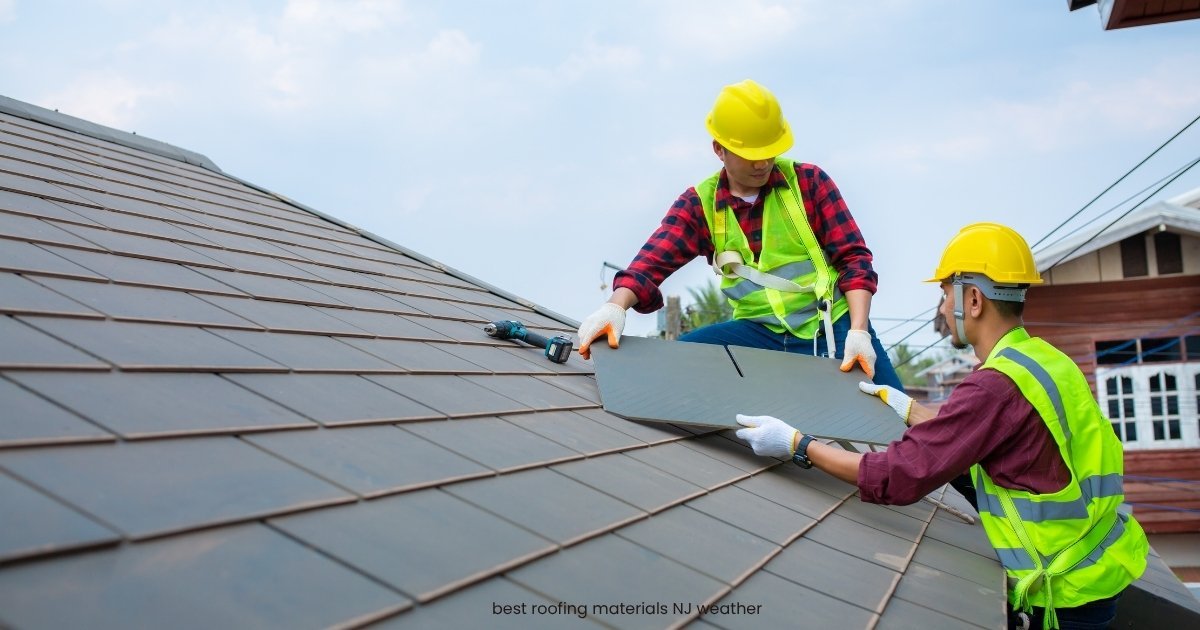
Choosing a new roof in New Jersey isn’t simply about picking a color or finding the lowest estimate. A roofing system in the Garden State has to handle several different challenges during the same year: strong winds, heavy rain, winter snow, ice, summer heat, humidity, and frequent temperature changes.
That makes choosing the best roofing materials NJ weather requires a decision about total roof performance rather than appearance alone.
New Jersey’s Office of Emergency Management warns that nor’easters can bring powerful winds, rain, snow, coastal flooding, and ice, while heavy snow accumulation can place significant loads on roofs. These conditions help explain why material quality, installation technique, ventilation, flashing, underlayment, and drainage all matter when replacing a roof.
For many New Jersey homeowners, architectural asphalt shingles provide the strongest overall balance of affordability, appearance, repairability, and weather performance. Metal roofing offers an excellent premium alternative when long-term durability is the priority, while slate can be a compelling high-end solution for suitable homes.
The right answer, however, depends on the house.
This guide explains the major options, their advantages and trade-offs, and what New Jersey property owners should evaluate before making a long-term roofing investment.
Quick Answer: What Roofing Material Is Best for New Jersey?
For the average single-family home in New Jersey, architectural asphalt shingles are usually the most practical all-around roofing choice.
They are widely available, work with many common residential roof designs, come in numerous colors and profiles, and can provide dependable protection when the complete roofing system is installed correctly. They also make individual repairs more practical than some premium materials.
However, homeowners looking beyond the initial investment should also consider metal.
A properly designed metal roofing system offers excellent resistance to moisture and severe weather while providing a long service potential. Its higher initial investment can make sense for homeowners who expect to remain in their property for many years.
Slate belongs in another category. It offers exceptional durability and a distinctive appearance, but its weight, specialized installation requirements, structural considerations, and price make it better suited to certain properties rather than every New Jersey home.
The decision can be summarized this way:
| Material | Weather Performance | Initial Cost | Maintenance | Best Fit |
|---|---|---|---|---|
| Architectural asphalt shingles | Very Good | $$ | Low–Moderate | Most NJ homes |
| Metal roofing | Excellent | $$$ | Low | Long-term investment |
| Natural slate | Excellent | $$$$ | Specialized | Premium/historic homes |
| Synthetic/composite roofing | Very Good | $$$ | Low–Moderate | Premium appearance with less weight |
| Cedar shakes | Moderate | $$$ | High | Appearance-focused homes |
| Clay/concrete tile | Good when properly designed | $$$$ | Moderate | Structurally suitable specialty homes |
| TPO/EPDM/SBS systems | Very Good | Varies | Moderate | Low-slope and commercial roofs |
No table can replace an inspection, though. Roof pitch, decking, ventilation, drainage, exposure, surrounding trees, building height, attic conditions, and previous damage can change which option makes the most sense.
Genesis Roofing & Exteriors offers professional residential roofing services for homeowners in Clifton and surrounding North and Central New Jersey communities.
Why New Jersey Weather Demands the Right Roofing System
New Jersey doesn’t have a single roofing challenge. It has several.
A material that performs well during summer must also make it through cold winter conditions. A roof that handles normal rainfall still needs proper installation to resist wind-driven rain during stronger storms. Flashing must remain watertight as temperatures change, while gutters and drainage systems need to move water away efficiently.
NJOEM specifically identifies nor’easters as a significant New Jersey hazard and notes that these storms may bring high winds, rain or snow and prolonged impacts. Heavy snow can also damage roofs when accumulations become significant.
That is why homeowners should evaluate the entire roofing assembly, not only the visible material.
Snow, Ice and Freeze-Thaw Cycles
Snow itself isn’t always the main concern. Problems frequently develop when snow melts, water moves across the roofing system, temperatures fall again, and that moisture freezes.
Repeated temperature changes can expose weaknesses around roof penetrations, valleys, flashing and aging materials.
Attic insulation and ventilation also matter. A roofing material cannot compensate for every problem beneath it. A complete evaluation should consider the roof covering, deck, underlayment, flashing, ventilation and attic conditions together.
Why Installation Matters as Much as Material
Even an expensive roofing product can perform poorly when installed incorrectly.
Fastener placement, flashing details, manufacturer installation instructions, deck preparation, valley construction and ventilation can determine whether a new roof actually delivers the performance homeowners expect.
Underlayment, Flashing and Ventilation
These components aren’t as visible as shingles or standing-seam panels, but they are fundamental to the system.
Underlayment provides an additional layer of protection beneath the primary roofing material. Flashing protects vulnerable transitions around chimneys, vents, walls and roof intersections. Ventilation helps manage temperature and moisture in the attic.
The Homeowner Takeaway
Don’t compare roofing estimates only by the name of the surface material.
Ask what roofing system is being installed, what underlayment is included, how flashing will be handled, whether existing decking will be evaluated, how ventilation will be addressed, and which manufacturer requirements apply.
Roofing Materials Comparison for New Jersey Homes
1. Architectural Asphalt Shingles: Best Overall Choice
Architectural asphalt shingles are an excellent starting point for most New Jersey residential roofing projects.
Unlike basic flat three-tab designs, architectural shingles have a dimensional appearance and are available in product lines designed for different levels of wind, impact, algae and weather performance.
Their biggest advantage is balance.
They can provide strong performance without moving the project into the premium cost category of standing-seam metal or slate. They are also familiar to roofing contractors and work well with the sloped roof styles common throughout New Jersey neighborhoods.
Why Architectural Shingles Work Well in New Jersey
Architectural shingles offer several practical advantages:
- Broad availability and numerous styles.
- Competitive installation costs.
- Straightforward repair options.
- Compatibility with many residential roof structures.
- Product lines designed for stronger wind performance.
- Good curb appeal without premium-material pricing.
- Wide selection of colors for different home styles.
The exact product is important. Homeowners should compare manufacturer specifications rather than assuming every architectural shingle has identical wind, impact, algae or warranty characteristics.
Proper installation matters just as much.
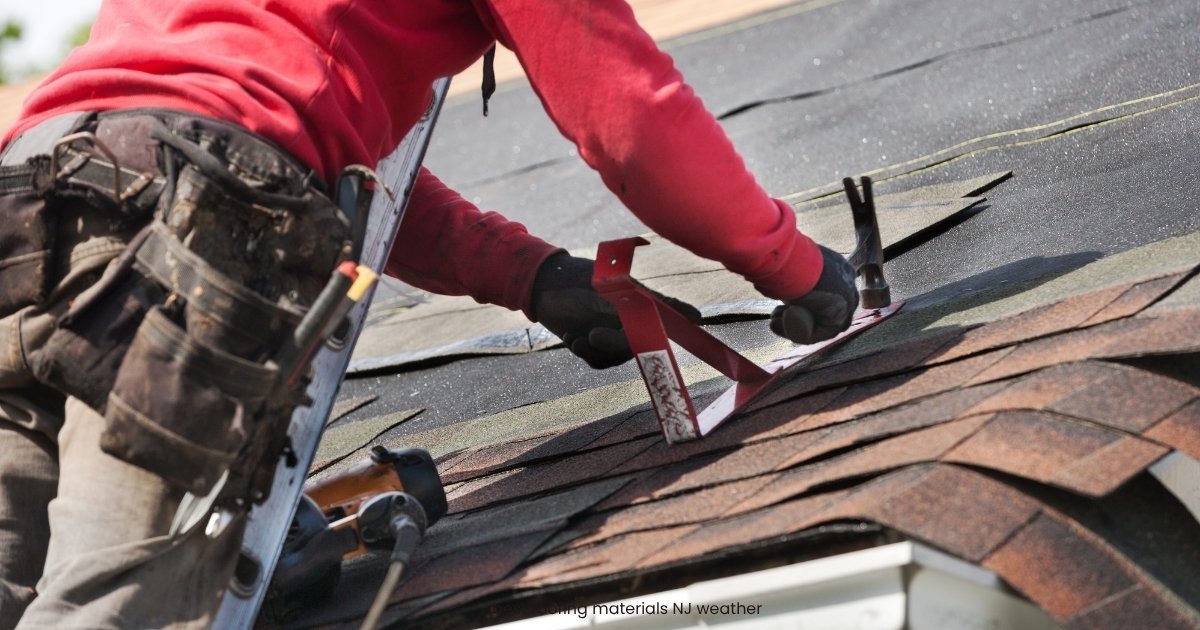
The roof deck should be inspected, damaged materials addressed, appropriate underlayment installed and vulnerable areas properly flashed. If an existing roof has widespread deterioration, repeated leaks or significant storm damage, a professional roof replacement evaluation can determine whether replacement makes more financial sense than continuing repairs.
Best for: Most New Jersey single-family homes, budget-conscious homeowners and owners looking for a strong balance between cost and long-term performance.
2. Metal Roofing: Best Premium Weather-Resistant Option
Metal roofing deserves serious consideration in New Jersey, particularly when long-term durability is more important than minimizing the initial project cost.
Modern residential metal roofing is significantly different from the simple exposed metal panels many homeowners imagine. Residential systems are available in standing-seam profiles, metal shingles and other designs.
Metal handles water efficiently, is non-absorptive and can provide excellent performance when panels, seams, flashing and attachment systems are correctly designed and installed.
Another advantage is snow shedding. Smooth metal surfaces can allow snow to move off steep roof areas more easily, although this must be managed carefully around entrances, walkways, landscaping and lower roof sections.
Standing Seam Metal vs. Metal Shingles
Standing-seam metal roofing hides most fasteners beneath raised seams and delivers a clean, contemporary appearance. It is commonly considered the premium residential metal option.
Metal shingles can offer many metal-roof benefits while creating a profile closer to traditional shingles, shakes or tiles.
Neither should be selected based on appearance alone. Gauge, coating, panel design, attachment system, flashing, roof geometry and manufacturer requirements can all affect performance.
Reflective roof surfaces may also influence summer heat gain. New Jersey’s Department of Environmental Protection identifies metal shingles or tiles among possible cool-roof choices for steep-slope buildings and explains that roof color and reflectance influence solar heat absorption.
Best for: Homeowners seeking a premium long-term roofing system, strong weather resistance and modern appearance.
3. Slate Roofing: Best for Premium Longevity
Natural slate is one of the most durable and visually distinctive roofing materials available.
It resists water, does not rot and offers a classic appearance that works especially well on historic, luxury and architecturally significant homes.
But slate isn’t automatically the right solution simply because it is durable.
Its weight must be considered. The roof structure must be capable of supporting the selected system, and installation requires specialized knowledge. Repair also requires contractors familiar with slate rather than standard asphalt-shingle techniques.
The upfront investment is considerable.
For a property where the architecture, structure and ownership plans justify that investment, however, slate can provide an exceptional roofing solution.
Best for: Historic properties, premium homes and long-term owners with structures capable of supporting the system.
4. Synthetic and Composite Roofing
Synthetic roofing has become an interesting alternative for homeowners who like the appearance of slate or cedar but want a product with different weight, maintenance or installation characteristics.
Composite products may be manufactured from polymers, recycled materials or engineered combinations designed to replicate natural materials.
Quality varies significantly between manufacturers.
Homeowners should therefore compare tested product performance, manufacturer warranty conditions, installation requirements, fire classification and approved applications rather than making a decision based on appearance alone.
A premium synthetic product can make sense when architectural character is important but natural slate or cedar creates structural, maintenance or budget concerns.
Best for: Homeowners wanting a premium shake or slate appearance with different maintenance and structural requirements.
5. Cedar Shakes and Wood Shingles
Cedar has undeniable visual appeal.
It can complement traditional, craftsman, coastal and rustic architecture beautifully. However, New Jersey’s moisture, snow, shade and seasonal changes mean wood roofing requires thoughtful maintenance.
Organic debris should not be allowed to collect. Moss, algae, moisture exposure and ventilation conditions need attention. Installation quality is also extremely important because wood must be able to dry appropriately.
That maintenance requirement makes cedar less universally practical than architectural shingles or metal roofing.
Homeowners should choose wood because they value its specific appearance and understand the care it requires, not simply because it is a premium material.
Best for: Design-focused homes where owners are prepared for more ongoing maintenance.
6. Clay and Concrete Roofing Tiles
Clay and concrete tiles can provide excellent durability and distinctive architecture, but they are less common on typical New Jersey homes than asphalt shingles.
Weight is a major consideration.
A house must be structurally suitable for the selected system. Individual tile vulnerability, underlayment, flashing, drainage and freeze-thaw performance also need to be considered as part of the complete design.
These products therefore work best as specialty solutions rather than default recommendations for most New Jersey roof replacements.
Best for: Architecturally appropriate homes with structures designed or verified to support tile roofing.
7. TPO, EPDM and SBS for Low-Slope Roofs
Not every New Jersey roof is steep enough for shingles.
Commercial buildings and some residential additions, porches and modern structures use low-slope roofing systems that require a different approach.
Genesis Roofing & Exteriors reports working with TPO, EPDM and SBS modified bitumen systems, in addition to asphalt shingles and metal roofing.
TPO is a single-ply membrane commonly used on low-slope roofs. EPDM is a synthetic rubber membrane known for flexibility, while SBS modified bitumen combines asphalt with modifiers to create a flexible membrane system.
These systems depend heavily on drainage, seams, penetrations, flashing, substrate preparation and installation method.
The roof’s slope and building use should determine the roofing system. Installing a material designed for steep slopes where a membrane system is required is not an acceptable shortcut.
Genesis provides commercial roofing services in New Jersey for businesses and property managers dealing with flat-roof leaks, drainage problems, aging systems and replacement needs.
Which Roof Performs Best Against Snow and Ice?
There isn’t one material that makes snow and ice irrelevant.
Metal can shed snow efficiently, while quality asphalt shingles provide dependable winter performance when installed as part of a properly designed roofing assembly.
The larger issue is system design.
Ice-related problems may involve insulation, ventilation, heat loss, drainage, valleys, eaves and flashing in addition to the exterior material.
New Jersey homeowners should pay particular attention to roof areas where snow accumulates, sections shaded for long periods, valleys where meltwater concentrates and gutters that may become blocked.
If water stains, moisture, loose shingles or other warning signs appear after winter weather, schedule a professional roof inspection rather than relying only on what can be seen from the ground. Genesis inspections review roofing surfaces, flashing, penetrations, gutters, drainage areas and visible signs of moisture or storm damage.
Which Roofing Material Performs Best Against New Jersey Wind?
Material matters, but wind performance depends on more than material category.
Two asphalt shingles from different product lines may have different tested ratings. A metal system can also perform differently depending on its attachment and installation.
Homeowners should look at:
- Manufacturer wind specifications.
- Correct fastener pattern and placement.
- Roof-edge details.
- Deck condition.
- Flashing installation.
- Building height and exposure.
- Roof shape and pitch.
- Local code requirements.
New Jersey’s construction requirements deserve particular attention because codes evolve. As of August 17, 2026, the New Jersey Department of Community Affairs lists the 2024 International Residential Code and 2024 International Building Code among the currently adopted codes for their respective subcodes. Property-specific requirements should always be confirmed for the project and municipality.
For homeowners dealing with damage after strong wind, missing shingles or severe weather, Genesis also provides storm damage roof repair throughout its New Jersey service area.
Energy Efficiency and Cool Roofing in New Jersey
Roofing material can influence how much solar energy a roof absorbs.
However, choosing an energy-efficient roofing system is more complicated than simply buying the lightest-colored material available.
New Jersey DEP notes that roof color can influence solar reflection and identifies cool-roof choices for both steep- and low-slope roofs. See New Jersey DEP’s Efficient Home Design guidance
The U.S. Department of Energy similarly explains that useful cool-roof characteristics include high solar reflectance, durability of that reflectance and high thermal emittance. DOE also cautions that climate matters because reducing heat absorption can produce different heating and cooling trade-offs depending on location. Review the U.S. Department of Energy cool-roof guidance
For a New Jersey home, roofing efficiency should therefore be evaluated together with attic insulation, ventilation, air sealing, roof color and HVAC performance.
How to Choose the best roofing materials NJ weather Requires
Choosing a new roof should begin with the property itself.
Roof Pitch, Structure and Existing Deck
First determine which materials are appropriate for the roof’s slope and structure.
A conventional steep-sloped home may accommodate asphalt shingles, metal or other materials, while a low-slope roof may require a membrane system.
Heavy products such as natural slate or tile can introduce structural considerations that lightweight alternatives do not.
The existing roof deck also needs evaluation.
Soft, deteriorated or damaged decking should not simply be hidden beneath new roofing material. Replacement provides an opportunity to identify underlying problems before installing a new system.
Budget vs. Long-Term Value
Avoid making the decision based only on initial price.
Consider:
| Question | Why It Matters |
|---|---|
| How long do you expect to own the home? | A premium system may provide more value to a long-term owner. |
| How complex is the roof? | Valleys, dormers, skylights and multiple slopes increase installation complexity. |
| What maintenance are you comfortable with? | Cedar and specialty materials may require more attention. |
| Is repairability important? | Localized repairs can be simpler with some materials than others. |
| Are you prioritizing resale appeal? | Roofing appearance can influence curb appeal. |
| Does the structure support heavier roofing? | Slate and tile may require structural evaluation. |
| What does the manufacturer warranty actually cover? | Warranty terms vary by product and installation conditions. |
Homeowners comparing complete project costs can also review Genesis’s guide to roof replacement cost in New Jersey before requesting a property-specific estimate.
Manufacturer Specifications and Local Code Requirements
A roofing contractor should not treat every product from the same material category as identical.
Check the manufacturer’s instructions and applicable specifications for wind performance, slope, fastening, ventilation, underlayment and warranties.
New Jersey’s Department of Community Affairs maintains the state’s current construction code information. Check current New Jersey construction codes
Local permit and code requirements should be confirmed before installation rather than assumed from an older roofing project.
Roofing Material Maintenance in New Jersey
Even excellent materials need attention.
Weather exposure gradually affects sealants, flashings, fasteners, roof penetrations, gutters and drainage areas. Falling branches and wind-driven debris can also create damage unrelated to a material’s expected aging.
A useful maintenance approach includes checking the roof after severe weather, keeping gutters and drainage paths clear, monitoring the attic for moisture, watching for ceiling stains, removing problematic debris and arranging periodic professional inspections.
Genesis’s roof maintenance and protection services are designed to identify minor roofing issues before they develop into more expensive problems.
Small problems matter.
One damaged flashing detail or exposed roof penetration can allow water into an otherwise serviceable roofing system. That’s why proactive inspection often creates more value than waiting for an obvious leak.
When Material Problems Mean You Need Roof Replacement
A few damaged shingles don’t automatically mean the entire roof needs replacement.
Localized storm damage, isolated flashing problems and individual missing shingles may be repairable.
Replacement becomes more likely when deterioration is widespread, multiple leaks keep returning, the roof is approaching the end of its useful service period, the underlying deck has problems or the cost of repeated repairs is becoming difficult to justify.
Genesis explains the distinction further in its guide to roof repair vs. roof replacement.
Homeowners shouldn’t make that decision from the ground based on appearance alone.
An inspection helps determine whether the visible symptom is a small isolated problem or evidence of a larger roofing-system failure.
Why Professional Installation Matters
Homeowners often spend significant time comparing shingles, metal panels and other materials but considerably less time comparing installation systems.
That can be a mistake.
A quality roofing installation requires careful preparation, material handling, flashing, fastening, ventilation, cleanup and final inspection.
Genesis Roofing & Exteriors states that its process begins with a roof inspection, followed by recommendations and material selection, professional installation, final review and cleanup. The company is based in Clifton and serves homeowners and businesses across North and Central New Jersey.
For homeowners planning a replacement, the goal should be to select the right material installed as the right system.
A premium material installed poorly isn’t a premium roof.
Homeowners who aren’t sure which material fits their property can contact Genesis Roofing & Exteriors to schedule an inspection and discuss their roof, budget and long-term goals.
FAQs About Roofing Materials in New Jersey
1. What is the best roofing material for most New Jersey homes?
Architectural asphalt shingles are often the strongest overall choice for a typical New Jersey home because they balance price, appearance, weather performance, availability and repairability. Homeowners prioritizing maximum long-term durability may prefer metal roofing.
2. Is metal roofing better than asphalt shingles in New Jersey?
It depends on your priorities. Metal offers excellent weather resistance and long-term value but normally requires a higher initial investment. Architectural asphalt shingles provide strong practical performance at a more accessible project cost.
3. What roofing material is best for New Jersey snow?
Both quality architectural shingles and properly installed metal roofing can perform well in snowy conditions. Roof pitch, insulation, ventilation, flashing and drainage are also important because winter roofing problems cannot be solved by surface material alone.
4. What roof is best for strong winds and storms?
Choose a roofing system with appropriate tested wind performance for the property and make sure it is installed according to manufacturer and applicable code requirements. Architectural shingles and metal systems are both available in configurations designed for demanding weather conditions.
5. Is a dark roof a bad choice in New Jersey?
Not necessarily. Color is only one element of roof performance. Solar reflectance, thermal emittance, attic insulation, ventilation and the building’s heating and cooling needs should be evaluated together. New Jersey experiences both hot summers and cold winters, so the decision should account for year-round performance.
6. Are slate roofs good for New Jersey weather?
Yes, natural slate can provide exceptional weather resistance and longevity. However, it is heavy, expensive and requires specialized installation, so the building structure and project budget must be evaluated first.
7. Are three-tab asphalt shingles or architectural shingles better?
For homeowners prioritizing durability and appearance, architectural shingles are generally the stronger choice. Product specifications still vary, so compare actual manufacturer ratings rather than relying solely on the shingle category.
8. What roofing material should be used on a flat roof?
Low-slope roofs generally require systems designed specifically for low-slope applications rather than conventional shingles. Depending on the building and roof design, options may include TPO, EPDM or SBS modified bitumen.
9. Should I replace my roof after storm damage?
Not automatically. Limited damage may be repairable. Widespread damage, repeated leaks or damage to multiple roofing components may justify replacement. A professional inspection should determine the scope before the decision is made.
10. How do I know which roofing material is right for my NJ home?
Start with a professional roof inspection. The contractor should consider roof slope, deck condition, building structure, ventilation, weather exposure, budget, appearance preferences and long-term ownership goals before recommending a material.
Final Thoughts: Choosing the Right New Jersey Roof
New Jersey homeowners need roofs capable of handling more than one type of weather.
Winter snow and ice, strong winds, rain, temperature changes, summer heat and humidity can all affect roofing performance. The correct choice therefore involves more than selecting the material with the longest advertised lifespan or lowest initial price.
For most residential properties, architectural asphalt shingles provide an excellent combination of value, weather performance and curb appeal. Metal roofing is a strong premium choice for homeowners emphasizing durability and long-term ownership. Slate offers exceptional performance for structurally suitable premium or historic homes, while synthetic systems can provide alternative architectural options.
Low-slope buildings require an entirely different material strategy, with systems such as TPO, EPDM or modified bitumen often entering the discussion.
Most importantly, treat the roof as a complete system.
Material, roof deck, underlayment, flashing, ventilation, drainage and installation quality work together. Neglecting one component can reduce the benefits of all the others.
Genesis Roofing & Exteriors has served residential clients in New Jersey since 2008 and provides residential and commercial roofing, repairs, replacements, storm-damage service and inspections from its Clifton base.
If you’re planning a new roof or aren’t sure whether your current system needs repair or replacement, schedule a professional inspection before choosing the material. A property-specific assessment will help you compare options based on your roof—not someone else’s.
Protect your home with a roofing system selected for New Jersey conditions.
Schedule a Free Roof Inspection with Genesis Roofing & Exteriors